Bulk sprouting & microgreen seed in 5, 10 and 20 lb bags | Ships from Cookeville, Tennessee

Microgreen Yield Per Tray: Real Numbers for 7 Popular Crops
Microgreen yield per tray compared across Penn State, Mississippi State, Missouri and a 2023 study, plus pounds of greens and seed cost per ounce from a bulk bag.

A standard 10 x 20 inch tray of microgreens usually yields about 3 to 8 ounces of cut greens in a home or small-farm setup, and 8 to 15 ounces in a tuned commercial system. Microgreen yield per tray depends mostly on the crop, the seeding rate, light, and how tall you let the tray grow before cutting. Radish and pea shoots are typically the heaviest; slow herbs such as cilantro are the lightest.
Below we compare published numbers from Penn State Extension, Mississippi State University Extension, the University of Missouri Extension microgreens budget and a 2023 study in Frontiers in Plant Science, then show what those yields mean in pounds of greens and seed cost per ounce from a bulk bag.
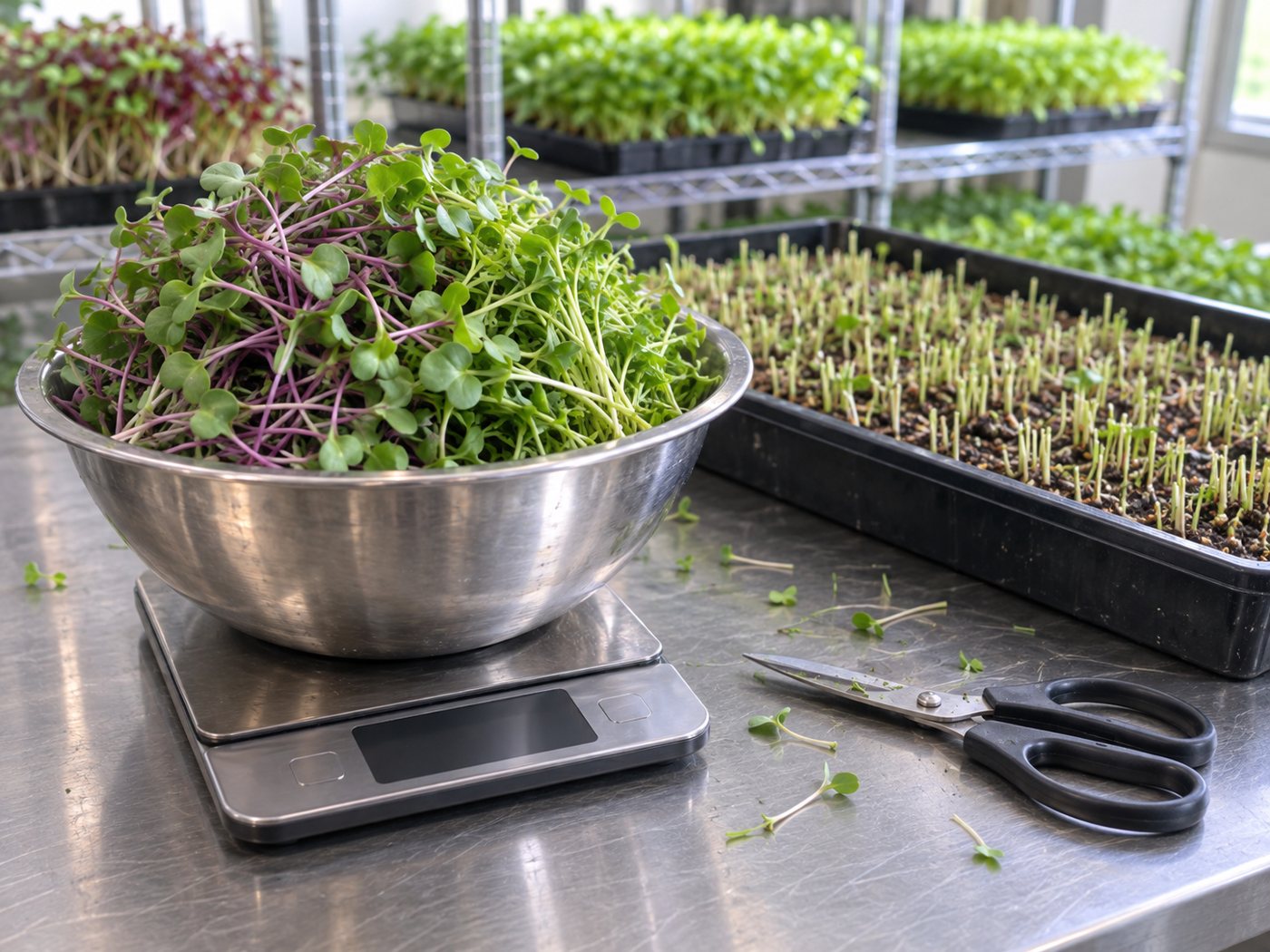
Microgreen Yield Per Tray by Crop
Each source measured or modeled microgreen yield per tray in a different way, so read across a row to see the realistic range for a crop rather than treating any single number as the answer.
| Crop | Penn State (measured, 12×20 tray) | Mississippi State (home grower) | Missouri budget (planning) | Di Gioia 2023 (converted to 1020) |
|---|---|---|---|---|
| Arugula | 148 g (5.2 oz) | 3 to 5 oz | Not modeled | 170 g (6.0 oz) |
| Broccoli | Not listed | 3 to 5 oz | 11.5 oz | 189 g (6.7 oz) |
| Red Russian kale | 155 g (5.5 oz) (Russian) | 4 to 6 oz | Not modeled | 186 g (6.6 oz) |
| Red cabbage | 106 g (3.7 oz) | 4 to 6 oz | 15.0 oz (cabbage) | 161 g (5.7 oz) |
| Radish | 122 g (4.3 oz) (daikon) | 6 to 8 oz | 8.0 oz | 291 g (10.3 oz) |
| Pea shoots | Not listed | 6 to 8 oz | 8.0 oz | Not tested |
| Cilantro | 47 g (1.7 oz) | 4 to 5 oz | Not modeled | Not tested |
Why Published Microgreen Yield Per Tray Numbers Disagree
The spread between sources is large, and it is not because anyone got it wrong. A few differences explain most of it:
- Seeding rate. Penn State’s trial used only 10 to 15 grams of seed per tray. Denser rates, like the Utah State rates in our microgreen seed density chart, produce heavier trays.
- Tray size. Penn State used a 12 x 20 inch tray, about 20 percent larger than a 1020.
- Light. Penn State grew in a greenhouse without supplemental light; the Frontiers study used a controlled growth chamber.
- Harvest stage. A tray cut at the cotyledon stage weighs less than one cut a few days later at the first true leaf.
- Measured versus modeled. Missouri’s figures are planning assumptions for a budget, not trial harvests, and are on the optimistic end.
The practical takeaway: plan with a conservative number from the table, then replace it with your own weights after a few cycles.
How to Measure Your Own Microgreen Yield Per Tray
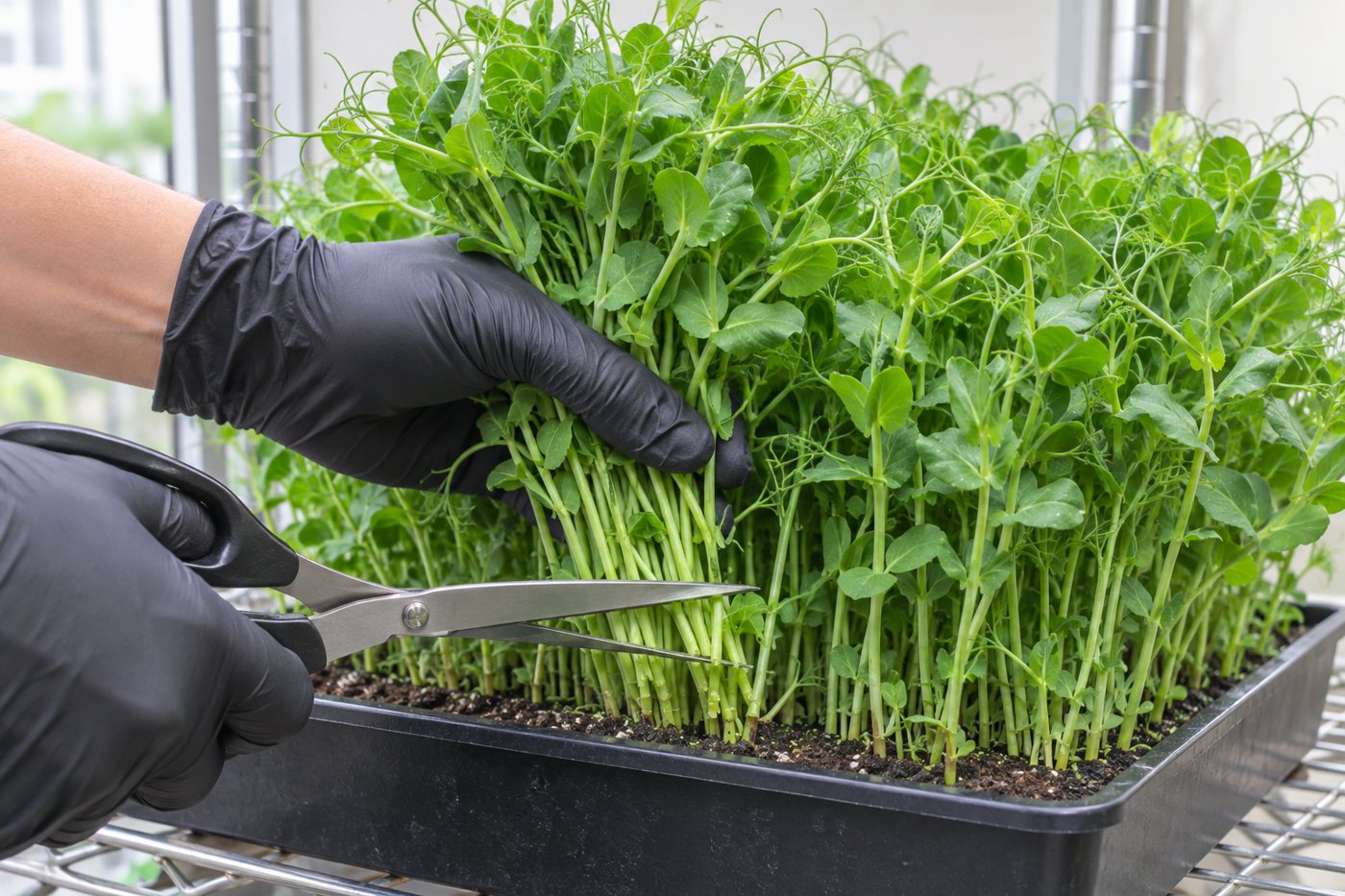
The only microgreen yield per tray that matters for your pricing is the one from your own racks. A simple routine takes a minute per tray:
- Record the inputs. Write the crop, seed lot, grams of seed, sow date and media on the tray tag.
- Harvest on schedule. Cut at the stage your customers want, just above the media line, with clean, sharp scissors or a knife.
- Weigh right away. Tare a clean container and weigh the cut greens before they lose moisture.
- Log the ratio. Divide ounces harvested by grams of seed sown. This yield ratio is the number to compare between crops and seed lots.
- Average several cycles. Penn State averaged 14 to 28 cycles per crop. Three to five of your own gives a usable planning figure.
Weigh in grams if you can. Small differences matter when you sell by the ounce, and a scale with 0.1 gram resolution makes the seed side of the ratio just as accurate.
From Tray Yield to Pounds Per Bulk Bag
Once you have a planning yield, you can see how many pounds of greens a bag of seed will produce and what the seed costs per ounce of harvest. The table below uses the seeding rates from our density chart, conservative planning yields drawn from the ranges above, and current 20 pound prices on this site.
| Crop | Seed per tray | Planning yield | Trays per 20 lb | Greens per 20 lb bag | Seed cost per tray | Seed cost per oz harvested |
|---|---|---|---|---|---|---|
| Arugula | 10 g | 4 oz | 907 | 227 lb | $0.16 | $0.039 |
| Broccoli | 28 g | 6 oz | 324 | 121 lb | $0.66 | $0.109 |
| Red Russian Kale | 28 g | 5 oz | 324 | 101 lb | $0.54 | $0.108 |
| Red Acre Cabbage | 25 g | 5 oz | 363 | 113 lb | $0.56 | $0.112 |
| Rambo Radish | 42 g | 7 oz | 216 | 94 lb | $2.04 | $0.291 |
| Daikon Radish | 42 g | 7 oz | 216 | 94 lb | $0.35 | $0.050 |
| Green Pea | 150 g | 8 oz | 60 | 30 lb | $0.42 | $0.052 |
| Cilantro, Split | 28 g | 4 oz | 324 | 81 lb | $0.32 | $0.080 |
Take broccoli: at 28 grams per tray, a 20 pound order (usually four 5 pound bags) sows about 324 trays. At a planning microgreen yield per tray of 6 ounces, that is roughly 121 pounds of finished greens, and the seed works out to about 11 cents per ounce harvested. Even premium Rambo radish stays well under a dollar of seed per ounce of greens.
For context, Penn State reports microgreens selling for $1.75 per half ounce through a direct market and $40 per pound wholesale, and the Missouri budget assumes $4.00 per ounce. Seed is rarely the biggest cost per tray; labor, media and packaging usually are. Our microgreens business plan covers the full cost picture.
Planning Weekly Trays From Your Yield
Your microgreen yield per tray turns customer orders into a sowing schedule. The math is simple: divide the ounces you need each week by your planning yield, then add a buffer for trays that underperform.
- Total your weekly orders by crop. For example, 40 ounces of broccoli for restaurants and farmers market bags.
- Divide by your planning yield. At 6 ounces per tray, 40 ounces needs about 6.7 trays.
- Round up and add a buffer. Most growers add 10 to 20 percent, so sow 8 trays.
- Multiply by seed per tray. Eight trays at 28 grams is 224 grams of broccoli seed per week, so a 20 pound bag lasts about 40 weeks.
- Stagger sowing. Back-schedule from delivery day using each crop’s days to harvest so every tray is cut at its best stage.
Tracking this for a month also tells you which crops earn their rack space. A radish tray that turns in about 8 days can be sown more often than a cilantro tray that takes three weeks, so a lighter tray of a fast crop can still out-produce a heavier tray of a slow one over a year.
Ways to Raise Your Microgreen Yield Per Tray
- Sow by weight, evenly. Patchy trays lose yield to empty space. Weigh seed for every tray and spread it in two passes.
- Use the right density for the crop. Too light leaves weight on the table; too dense invites mold and thin, weak stems that weigh less.
- Weight trays during blackout. A covered, weighted tray roots more evenly, which helps the whole stand stand up together.
- Give enough light after blackout. Microgreens are a low-light crop, but stretched, pale trays weigh less and look worse.
- Harvest at the right stage. A day or two can change weight noticeably. Test cutting one tray early and one later, then compare.
- Try a second cut on peas. Mississippi State notes pea shoots can be recut once, which adds yield from the same seed.
For crop-by-crop growing steps, see The Ultimate Guide to Growing Microgreen Seeds on our main site.
Post-Harvest Handling Protects Your Yield
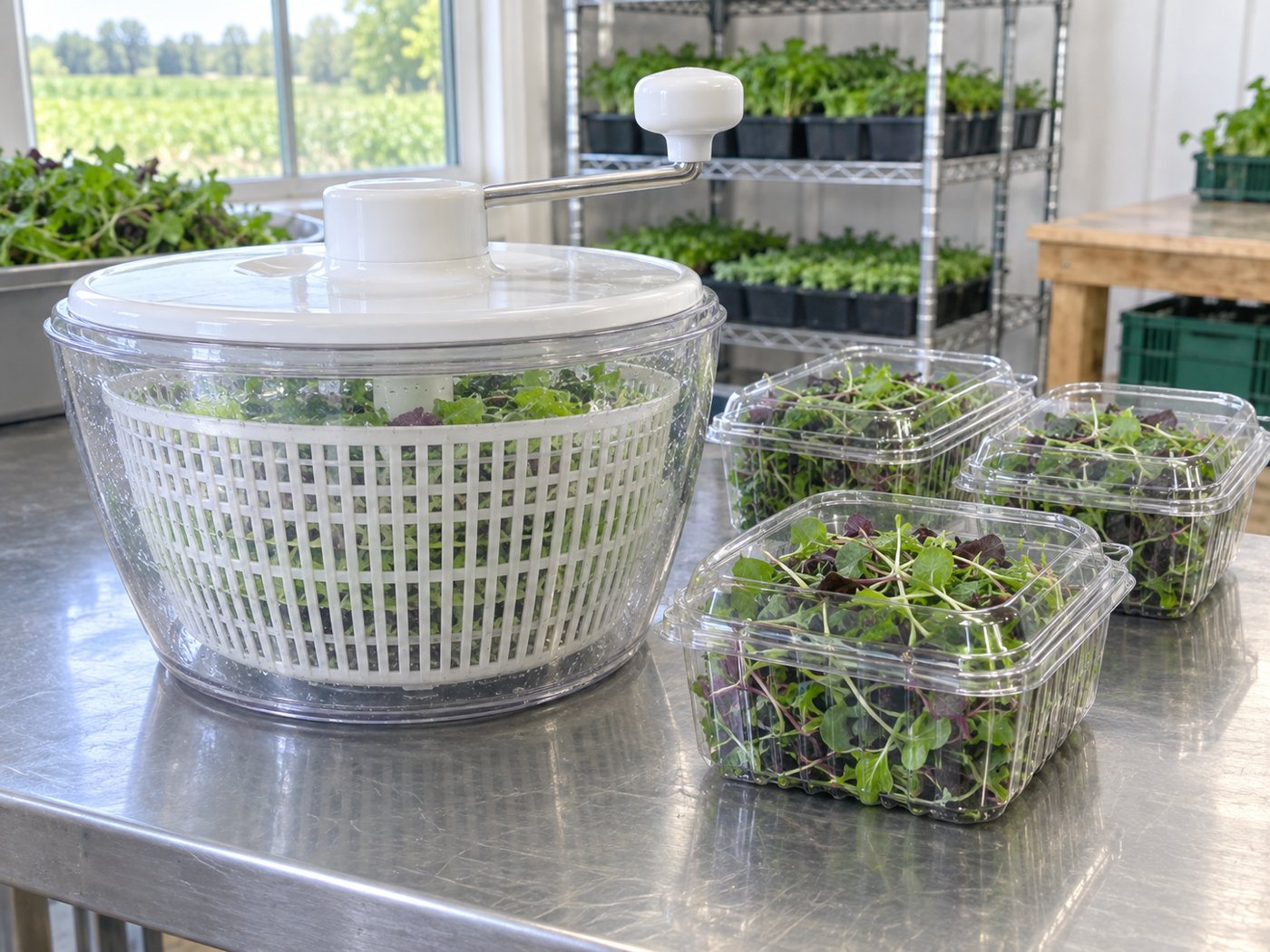
Yield you cannot sell is not yield. Penn State Extension found that washing microgreens before sale shortens their post-harvest life, and many growers ask customers to wash before eating instead. Penn State also reports that dark storage at 41°F can extend shelf life to 10 to 14 days, compared with 2 to 4 days at room temperature.
If your market or your process calls for washing, remove as much surface water as possible before packing. Wet greens break down fast in a closed clamshell. A large salad spinner handles several trays’ worth at once and is gentler than shaking or blotting.
Recommended Tool: Large Commercial Salad Spinner
Chef Master Large Commercial Salad Spinner, 5 Gallon
A hand-crank spinner with a 5 gallon bowl, sized for restaurant and catering prep, so you can dry a big batch of washed microgreens in one load instead of several. The aluminum crank and gears are built for daily use, and the basket doubles as a colander for rinsing.
As an affiliate, Todd’s Seeds may earn a commission from qualifying purchases made through this link, at no extra cost to you.
Food Safety for Microgreen Harvests
Treat microgreens like any fresh produce that may be eaten raw. Use clean trays and fresh growing media, keep harvest tools and containers sanitized, cut above the media line, and refrigerate promptly. If you also grow these seeds as sprouts in jars or sprouters, the warm, humid conditions that sprout seeds also favor bacterial growth. The FDA advises that children, older adults, pregnant women and people with weakened immune systems avoid raw or lightly cooked sprouts of any kind, and that cooking sprouts thoroughly reduces the risk.
Bulk Seed That Keeps Cost Per Tray Low
Higher microgreen yield per tray and lower seed cost per tray work together. Every Todd’s Seeds bulk bag is non-GMO, untreated seed, lab tested for germination and purity, with a lot number on every bag so you can track yield by lot. Most orders ship in 5 pound bags, so a 20 pound order usually arrives as four 5 pound bags. Shop broccoli, Rambo radish, daikon radish, green pea, Red Russian kale and more in 5, 10 and 20 pound sizes. See our free shipping details or browse the bulk seed shop.
Microgreen Yield Per Tray FAQ
What is a good microgreen yield per tray?
For a 10 x 20 inch tray, 3 to 8 ounces is typical for small-seeded crops in a home or small-farm setup, and 8 to 15 ounces is achievable in a tuned commercial system. Radish and pea shoots usually yield the most; cilantro and basil the least.
How many ounces of microgreens does a 1020 tray produce?
Published figures range from about 1.7 ounces for cilantro to 15 ounces for cabbage in a planning budget. Mississippi State Extension gives 3 to 5 ounces for broccoli and arugula, 4 to 6 for kale and red cabbage, and 6 to 8 for radish and pea shoots.
Which microgreens have the highest yield?
Radish had the highest fresh yield of seventeen species in a 2023 Frontiers in Plant Science study, about 10 ounces on a 1020 tray area. Pea shoots are also heavy and can be cut a second time.
How much seed do I need to get a pound of microgreens?
It depends on the crop. At a 28 gram seeding rate and a 6 ounce yield, broccoli needs about 2.7 trays and roughly 75 grams of seed per pound of greens.
Does seeding more densely increase yield?
Up to a point. Denser trays usually weigh more, but too much seed restricts airflow, raises mold risk and produces weaker stems. Increase density in small steps and weigh the results.
Should I wash microgreens before selling them?
Penn State Extension found that washing before sale shortens post-harvest life. If you do wash, dry the greens thoroughly, for example with a salad spinner, and refrigerate them promptly.
Sources
The microgreen yield per tray figures in this guide come from these extension, research and government resources:
- Penn State Extension, Growing Microgreens (updated December 16, 2025)
- Mississippi State University Extension, Microgreen Varieties for the Mississippi Gardener (P2884)
- University of Missouri Extension, Microgreens Planning Budget (G693)
- Di Gioia et al., Yield performance, mineral profile, and nitrate content in a selection of seventeen microgreen species, Frontiers in Plant Science, 2023
- Utah State University Extension, Grow Your Own Microgreens
- U.S. Food and Drug Administration, Selecting and Serving Produce Safely
[…] work for wheatgrass and microgreens. If you grow those too, our microgreen seed density chart and microgreen yield per tray guide cover seeding rates and harvest weights, and our main site explains growing wheatgrass […]