Bulk sprouting & microgreen seed in 5, 10 and 20 lb bags | Ships from Cookeville, Tennessee

Sprouting Seeds for Chickens: A Simple Fodder Tray Guide
Sprouting seeds for chickens with fodder trays: which untreated seeds to use, soak and harvest times, a 7 step method, seed cost per tray and how to prevent mold.

Sprouting seeds for chickens is simple: soak clean, untreated grain such as wheat for 8 to 12 hours, spread it about 1 to 2 cm deep in a draining tray, rinse it twice a day, and feed the green mat at day 6 to 8 when the shoots are about 6 to 8 inches tall. Fodder from sprouting seeds for chickens is a fresh treat on top of a complete layer feed, not a replacement for it. Done well, it gives your flock something green to work on in winter and turns a 20 pound bag of seed into well over 100 pounds of fresh feed.
This guide follows the method in Texas A&M AgriLife Extension, Feeding Fodder to Poultry, adds the honest nutrition math from North Dakota State University Extension, and shows the real seed cost per tray using current bulk prices. If you want the general overview first, our main site has a starter article on sprouting seeds for chickens.
Why Fodder Works for a Backyard Flock
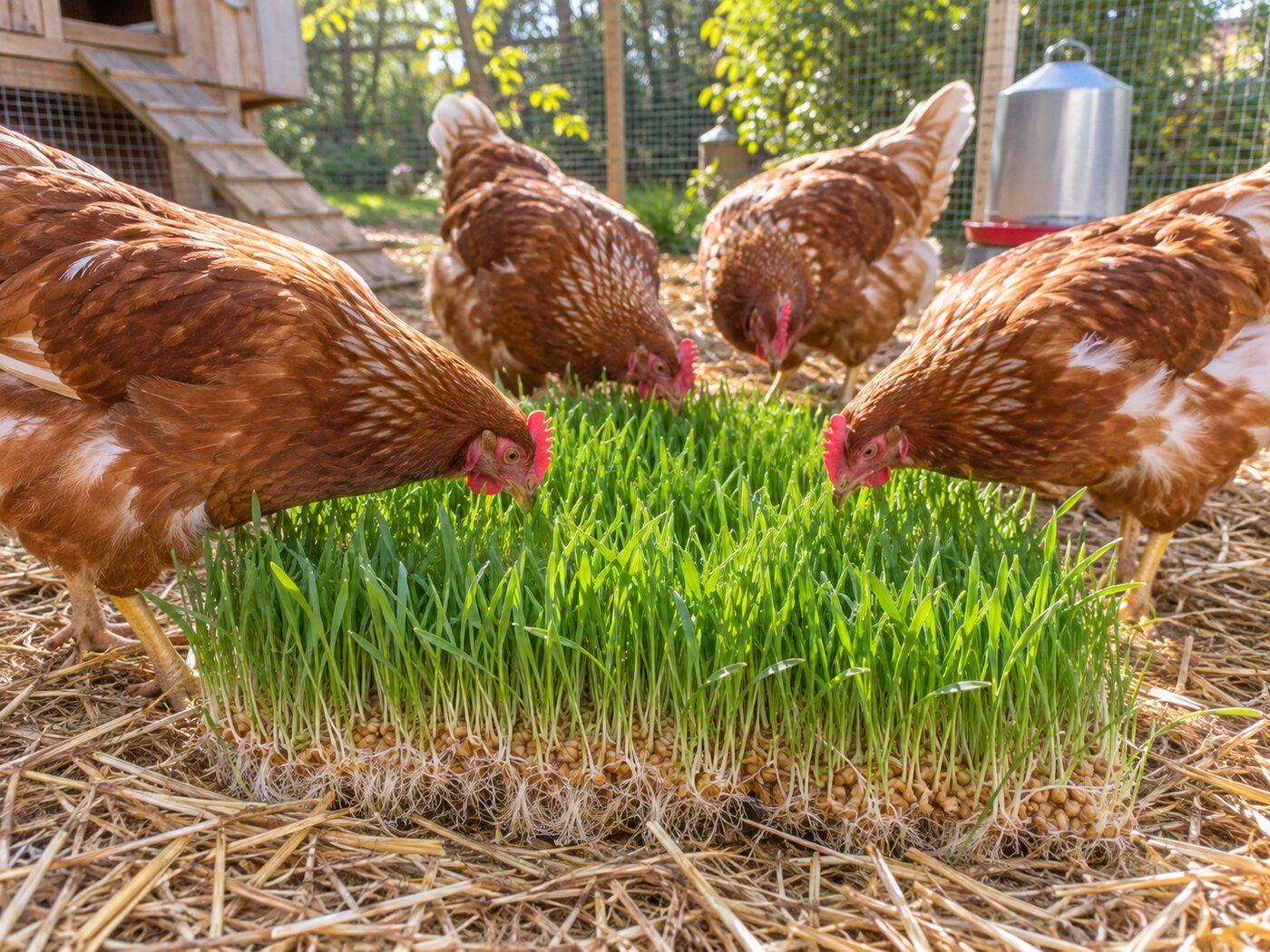
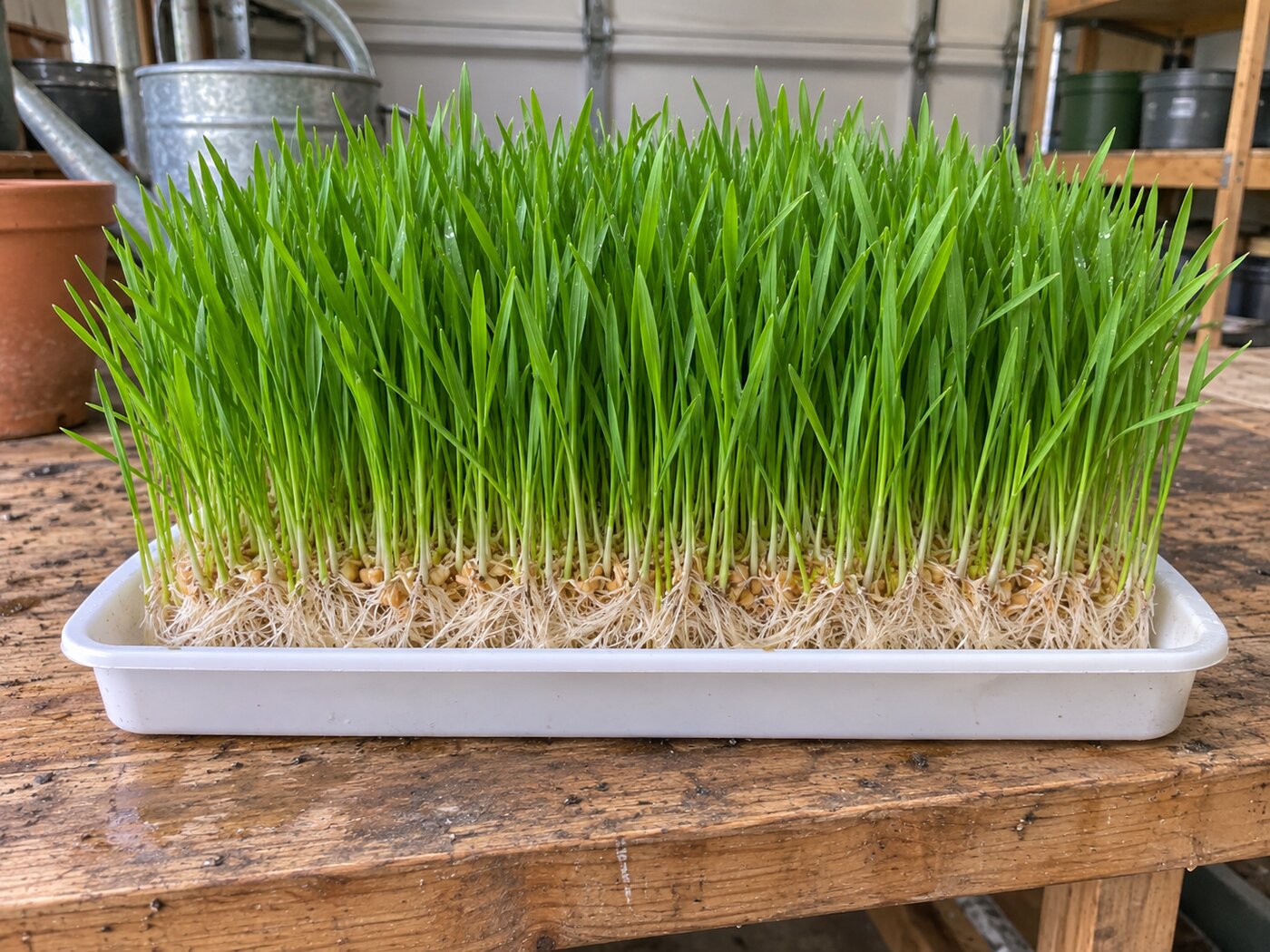
Fodder is grain that has been sprouted for about a week until it forms a thick mat of roots and green shoots. Texas A&M lists three reasons poultry keepers use it: fresh greens when pasture is dormant, an activity that keeps birds busy, and a modest change in nutrient profile, with crude protein rising by roughly 10 to 15 percent as the seed sprouts.
That last point needs context, and this is where a lot of fodder articles oversell. Sprouting does not create nutrients out of water. It moves them around.
What the Research Says About Sprouted Grain
- Dry matter goes down. A widely cited Australian review of hydroponic fodder for Meat and Livestock Australia found barley lost about 6.7 percent of its dry matter by day 3, 13.7 percent by day 5 and 18.2 percent by day 7, because the seedling burns starch for energy.
- Protein percentage goes up. In the same review, crude protein rose from 12.7 to 15.5 percent of dry matter. Most of that rise happens because starch is used up, so protein becomes a bigger share of what is left.
- Feeding value holds up. NDSU Extension reports that sprouting does not substantially reduce the nutritive value of grain, although heavy sprouting lowers energy per kernel.
- The extra weight is water. Fresh fodder is about 80 percent water, according to Texas A&M, which is why a small amount of seed turns into a heavy mat.
So the honest case for sprouting seeds for chickens is not that it is a super food. It is fresh, palatable, affordable greens that hens enjoy, with roughly the same nutrition as the grain you started with. Manitoba Agriculture makes a similar point, noting that feeding trials with beef cattle, pigs and poultry found sprouting had no effect on feed value. That is a good deal for a backyard flock in January.
Best Seeds for Sprouting for Chickens
Texas A&M names barley, wheat, oats, corn, sunflower and lentils as common fodder seeds. When sprouting seeds for chickens, wheat is the easiest place to start because it roots into a tight mat that lifts out of the tray in one piece. Here is how the seeds we carry compare:
| Seed | Soak | Days to feed | Notes |
|---|---|---|---|
| Hard red winter wheat | 8 to 12 hours | 6 to 8 days | Forms a firm root mat; best first crop |
| Green lentils | 8 to 12 hours | 3 to 6 days | Softer mat; works well mixed with wheat |
| Green peas | 8 to 12 hours | 6 to 8 days | Large seed; mix about 1 part peas to 3 parts wheat |
| Mung beans | 8 to 12 hours | 2 to 4 days | Feed as short sprouts rather than a tall mat |
| Crimson clover or red clover | 4 to 6 hours | 5 to 7 days | Tiny seed; sprinkle a little over a wheat tray |
A mixed tray gives hens variety. A good starting blend is mostly wheat with a handful of peas or lentils, plus a light sprinkle of clover. Keep big seeds and small seeds in the same tray only if they finish on the same schedule.
Only Use Untreated Seed
This is the one rule of sprouting seeds for chickens you cannot bend. Farm planting seed is often coated with fungicides or insecticides, and the National Pesticide Information Center is blunt: never consume treated seeds or use them for animal feed. Federal rules under 7 CFR 201.31a require treated seed to be labeled, often with a bright dye, but a missing label on a feed store scoop is not proof. Buy seed sold for sprouting, with a lot number you can trace. Every Todd’s Seeds bulk bag is untreated, non-GMO sprouting seed tested for germination, so the same hard red winter wheat you might grow as wheatgrass is safe to sprout for your flock.
How to Sprout Seeds for Chickens in 7 Steps
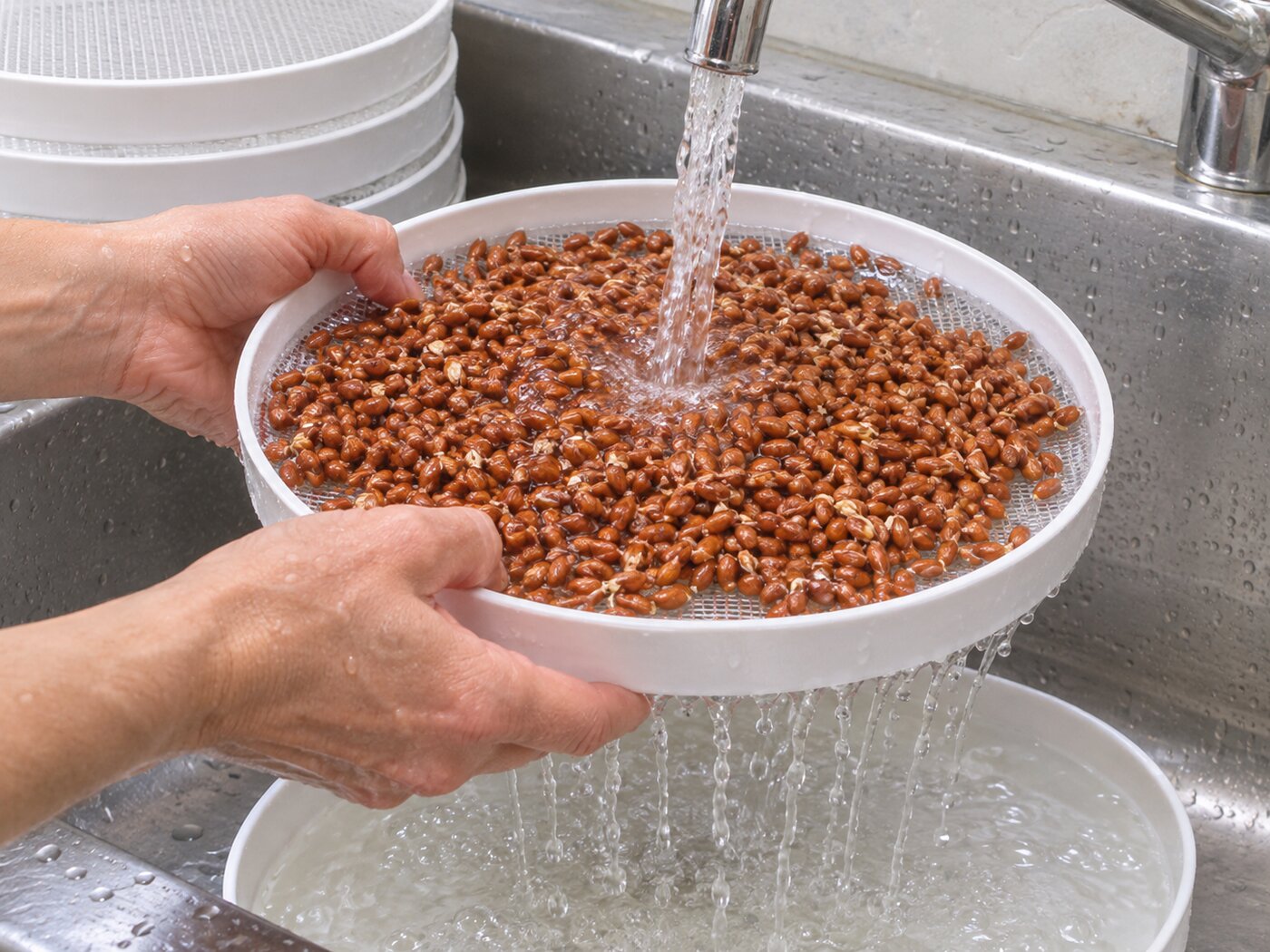
This method for sprouting seeds for chickens uses stacking mesh trays like the ones we recommend below, but any shallow tray with good drainage works. Plan on about 10 minutes a day.
- Measure the seed. Use enough to cover the tray about 1 to 2 cm deep. For a tray about 13 x 10 inches, that is roughly 1 pound of dry wheat.
- Rinse and soak. Rinse off dust, then soak in clean, cool water for 8 to 12 hours.
- Drain and spread. Pour off the soak water and spread the seed evenly in the mesh tray. Level it with your hand so no spot is piled high.
- Rinse twice a day. Run water over the tray morning and evening, then let it drain completely. Never leave seed sitting in water.
- Give it air and light. Keep trays at room temperature, out of direct hot sun, with air moving around them. A little indirect light turns the shoots green.
- Check every day. Smell and look at the mat. Fresh fodder smells like grass or cut grain; a sour or musty smell means a problem.
- Harvest at day 6 to 8. When shoots are about 15 to 20 cm tall, lift the mat out, break off a portion for the flock, and wash the tray before reusing it.
Texas A&M recommends feeding fodder fresh and storing it no more than 1 to 2 days. That is why a rotation matters: start one new tray each day, and you will have a fresh mat ready every morning.
Set Up a Daily Fodder Tray Rotation
A rotation is the difference between sprouting seeds for chickens now and then, and having fodder you can count on. For a 7 day crop, you need about 7 trays in use plus 1 soaking, or 8 to 10 trays total so you always have a clean spare.
Recommended Fodder Tray: Legigo 10 Pack Seed Sprouter Trays
Legigo 10 Pack Seed Sprouter Trays with Lids
Ten two-piece sets, each with an inner mesh tray that drains into a solid bottom tray, plus planting papers for small seeds. Each set is about 13 x 10 x 1.5 inches and made of food grade PP. Ten trays is exactly what a one-tray-a-day fodder rotation needs, and the mesh lifts out for rinsing and cleaning.
As an affiliate, Todd’s Seeds may earn a commission from qualifying purchases made through this link, at no extra cost to you.
The lids are handy during the first day or two to hold moisture, but take them off once the shoots are up so air can move. Stack trays loosely, not airtight, and keep the bottom trays emptied so the roots do not sit in runoff.
The trays you use for sprouting seeds for chickens also work for wheatgrass and microgreens. If you grow those too, our microgreen seed density chart and microgreen yield per tray guide cover seeding rates and harvest weights, and our main site explains growing wheatgrass hydroponically.
What Sprouting Seeds for Chickens Really Costs
Here is the seed cost per tray for sprouting seeds for chickens, using today’s prices on this site. The per tray figure assumes about 1 pound of grain for a 1 to 2 cm layer in a tray about 13 x 10 inches, or a quarter pound of clover sprinkled over a tray.
| Seed | 5 / 10 / 20 lb price | Cost per lb at 20 lb | Seed per tray | Seed cost per tray | Use |
|---|---|---|---|---|---|
| Hard red winter wheat | $7.52 / $12.04 / $23.50 | $1.18 | 1 lb | $1.18 | Main fodder grain; listed by Texas A&M |
| Green lentils | $8.99 / $15.99 / $29.99 | $1.50 | 1 lb | $1.50 | Listed by Texas A&M |
| Green peas | $8.08 / $12.93 / $25.25 | $1.26 | 1 lb | $1.26 | Good mixed with wheat |
| Crimson clover | $23.84 / $42.99 / $74.50 | $3.73 | 0.25 lb | $0.93 | Small seed; sprinkle into a wheat tray |
| Red clover | $25.99 / $51.20 / $100.00 | $5.00 | 0.25 lb | $1.25 | Small seed; sprinkle into a wheat tray |
Wheat is the budget anchor. At $23.50 for 20 pounds, it costs about $1.18 per pound, so one tray costs roughly $1.18 in seed. Texas A&M reports that 1 kg of dry grain can yield 6 to 8 kg of fresh fodder, which means a 20 pound bag can grow roughly 120 to 160 pounds of fresh mat, at about 15 to 20 cents per fresh pound.
Remember what that fresh weight is, though. The hydroponic fodder review found sprouts cost 2 to 5 times as much as the original grain per unit of dry matter once water, labor and equipment are counted. Sprouting seeds for chickens is worth it for fresh greens and flock enrichment, not as a way to cut your feed bill in half.
How to Feed Fodder Safely
The Texas A&M fact sheet lists the guardrails, and they are worth following exactly:
- Keep complete feed as the main diet. Fodder is a supplement. Offer what the flock cleans up in a short time, and keep layer feed available.
- Keep oyster shell out for layers. Fodder is low in calcium, and laying hens need calcium for strong shells.
- Introduce it slowly. Start small and build up over 1 to 2 weeks.
- Expect birds to drink a little less. Fodder is about 80 percent water, so lower water use is normal. Keep fresh water out anyway.
- Wait on young chicks. Texas A&M advises against feeding fodder to chicks younger than 3 to 4 weeks.
- Throw out moldy batches. Do not pick out the bad spots. If you see fuzzy growth or smell mustiness, discard the whole tray, wash and sanitize it, and start over.
Preventing Mold When Sprouting Seeds for Chickens
Mold is the most common reason people give up on sprouting seeds for chickens. Almost every case comes back to water and air. Spread seed thinner, drain completely after each rinse, empty the bottom tray, add a small fan, and keep the room below about 75°F if you can. Start every batch with clean seed and clean trays, since dirty or damaged grain can carry mycotoxins that birds should never eat.
Food Safety When You Handle Sprouts
The warm, moist conditions used for sprouting seeds for chickens also favor bacteria, so treat fodder trays like any sprouting setup. Wash your hands after handling trays and seed, keep the work area clean, and sanitize trays between batches. If you also sprout these seeds for your family, the FDA advises that children, older adults, pregnant women and people with weakened immune systems avoid raw or lightly cooked sprouts of any kind, and that cooking sprouts thoroughly reduces the risk.
Buy Fodder Seed in Bulk
If you are sprouting seeds for chickens every day, one tray a day goes through about 30 pounds of seed a month, so bulk bags make sense. Shop hard red winter wheat, green lentils, green peas, mung beans and crimson clover in 5, 10 and 20 pound sizes. Orders usually ship in 5 lb bags, so a 20 lb order usually arrives as four 5 lb bags, each labeled with its lot number, which also makes them easy to store and rotate. See our free shipping details or browse the bulk seed shop. Keeping pet birds too? Read our guide to sprouting seeds for birds.
Sprouting Seeds for Chickens FAQ
What are the best seeds for sprouting for chickens?
Wheat is the easiest and most affordable fodder seed because it forms a firm root mat. Texas A&M AgriLife Extension also lists barley, oats, corn, sunflower and lentils. Peas and a little clover add variety. Always use untreated seed sold for sprouting.
How long does it take to grow fodder for chickens?
Soak the seed 8 to 12 hours, then rinse twice a day. Wheat fodder is ready at day 6 to 8, when shoots are about 15 to 20 cm tall.
How much fodder should I feed my chickens?
Treat fodder as a supplement. Offer an amount the flock cleans up in a short time, keep complete layer feed available, and introduce it gradually over 1 to 2 weeks.
Can fodder replace chicken feed?
No. Fodder is about 80 percent water and low in calcium. It works best as fresh greens alongside a complete feed, with oyster shell available for laying hens.
Why is my chicken fodder moldy?
Usually too much water and too little air. Spread seed thinner, drain trays fully after each rinse, add airflow, and keep the room cooler. Discard any moldy tray completely and sanitize it.
Can I sprout wheat from the feed store for chickens?
Only if you know it is untreated. Planting seed is often treated with pesticides, and the National Pesticide Information Center says treated seed should never be used for animal feed. Buy seed sold for sprouting with a lot number.
Can baby chicks eat fodder?
Texas A&M advises waiting until chicks are at least 3 to 4 weeks old before offering fodder.
Sources
The sprouting seeds for chickens figures in this guide come from these extension, research and government resources:
- Texas A&M AgriLife Extension, Feeding Fodder to Poultry (POSC-PU-083)
- North Dakota State University Extension, Feeding Value of Sprouted Grains (AS647)
- Sneath and McIntosh, Review of Hydroponic Fodder Production for Beef Cattle, Meat and Livestock Australia, 2003 (copy hosted by Cornell)
- Manitoba Agriculture, What to Do With Sprouted Grains
- National Pesticide Information Center, Treated Seed
- Electronic Code of Federal Regulations, 7 CFR 201.31a, Labeling Treated Seed
- U.S. Food and Drug Administration, Selecting and Serving Produce Safely